en
en 

Best hair growth product: what science really says


Summary
Miracle serums, revolutionary shampoos, pills with golden promises… You’ve probably been sold the moon before. The hair product market is worth over $85 billion worldwide. Put simply, a lot of people are making a lot of money from your hair, or rather, from the hair you’re losing.

So, what actually works? Here’s the thing: despite this colossal industry, only two molecules have received FDA approval for hair loss (and these are likewise approved by the MHRA here in the UK). Two. Minoxidil and finasteride. The rest? Let’s just say it ranges from “promising but needs confirmation” to “don’t hold your breath.”
That doesn’t mean it’s all useless, mind you. Some hair loss treatments show rather respetcable results in studies. But there’s a massive gap between what the packaging claims and what the clinical data actually shows.
What really works: medical treatments
Minoxidil, or how a heart medication changed careers
Minoxidil wasn’t supposed to make hair grow. It’s primarily an antihypertensive. However, patients being treated with it began noticing a rather unexpected side effect: their hair was growing back. You know the rest.
How does it work? Minoxidil dilates the small blood vessels in the scalp. More blood, more nutrients for the follicles, and perhaps most importantly, it lengthens the hair growth phase (the famous anagen phase, for those who are curious).
In terms of figures, an Olsen study published in 2002 sets the tone: 84.3% of men using 5% minoxidil saw an improvement in hair density. We’re talking about an average gain of 12.7 hairs per cm² after one year of treatment. That’s proper, measurable results.
You’ve got the choice between the liquid solution and the foam, in 2% or 5% concentrations. The foam dries faster and is less irritating, but in terms of effectiveness, they’re much the same.
Here’s where things get tricky for some: minoxidil doesn’t cure anything. It stimulates growth. Stop the treatment, and within three to six months, you’re back to square one. It’s a long-term commitment, not a one-night stand.
Side effects? Approximately 5 to 7% of users complain of irritation. Some women develop unwanted facial hair (3 to 5% of cases). And then there’s that thing that scares everyone at first: “shedding.” Your hair falls out more during the first few weeks. Paradoxical? Not really, it’s actually a sign that the follicles are waking up and starting their active cycle again.

Finasteride: cutting the problem at the root
Finasteride takes a different approach. Rather than boosting growth, it directly targets the culprit: DHT, this hormone derived from testosterone that shrinks your follicles until they completely suffocate.
Finasteride blocks the enzyme that produces DHT. The result: 70% less DHT in the blood. The Kaufman study (1998) shows that 83% of men treated keep their hair or regrow it after two years. Not bad at all.
One thing to bear in mind: this treatment is reserved for men. For pregnant women or women who may become pregnant, there are risks to the foetus.
We hear quite a lot about sexual side effects. The real figures? Between 2 and 4% of patients, according to meta-analyses. And these effects disappear when the treatment is stopped. An interesting detail: when patients are informed in detail about these risks before treatment, they report them more often. The nocebo effect is not a myth.
A little bonus: combining minoxidil and finasteride gives results 25% better than each product taken alone. The synergy is well documented.

Dietary supplements: much ado about… what exactly?
Biotin, this star that doesn’t really deserve it
Open any women’s magazine, and you’ll find biotin. Vitamin B8, dream hair, rock-solid nails… The marketing is in full swing.
The reality? If you’re deficient in biotin, yes, your hair can suffer. The catch: a true biotin deficiency is extremely rare. The recommended intake is around 30 micrograms per day. Supplements offer 5,000, 10,000, sometimes more. That’s 150 to 300 times the necessary dose.
Without a proven deficiency (a blood test is available through your GP or privately), swallowing these mega-doses is absolutely pointless for your hair. Your body eliminates the excess, full stop.

Iron and zinc: yes, but only if you’re deficient
Iron is another matter. The link between iron deficiency and telogen effluvium (this diffuse hair loss that occurs after stress or illness) is well-documented. Zinc also plays a role in keratin production.
But, and this is a big but, taking supplements “just in case” is a bad idea. Too much zinc disrupts copper absorption. Too much iron can be toxic. Get a blood test; you’ll know if you actually need these supplements. Otherwise, save your money.

Some natural alternatives that work
Saw palmetto works somewhat like finasteride, partially blocking the conversion of testosterone to DHT. A gentler version, if you will. A comparative study shows 38% improvement with saw palmetto, compared to 68% for finasteride. Less effective, certainly, but an option for those who want to avoid medication.
Pumpkin seed oil has been in the news thanks to a Korean study: 40% more hair after six months in the 76 men tested, with a 40% reduction in local DHT. Interesting. But we still lack sufficient data to declare victory.
To delve deeper into the subject, our guide on hair regrowth supplements details everything.

Anti-hair loss cosmetics: where to spend your money (and where not to)
What probably won’t work
Caffeine serums? In the lab, caffeine stimulates follicles. On your head, it’s a different story. Does the molecule really penetrate to the roots at a sufficient concentration? Serious clinical studies are sorely lacking.
Anti-hair loss shampoos, let’s talk about them. A shampoo stays on your scalp for two, three minutes maximum. You rinse, that’s it. No active ingredient can do anything significant in that short time. These products make your hair look nicer , perhaps more voluminous. But they won’t regrow the hair you’ve lost.

The exception that proves the rule: ketoconazole
This antifungal shampoo is worth a closer look. At a 2% concentration, it not only fights dandruff but also reduces DHT locally by 12 to 16% in one month. Some studies place it on par with 2% minoxidil in terms of effectiveness.
The advantage? As a complement to a proper treatment, it adds a layer of protection without systemic effects. Two shampoos a week are sufficient.

Laser helmets: gimmick or not?
LLLT (low-level laser) devices aren’t entirely far-fetched. Some studies report 35 to 40% improvement in density after six months of use. The principle: to stimulate the energy of follicular cells via the mitochondria.
Modest results compared to medical treatments, it must be said. And the price stings: between £250 and £850 for a decent device. A supplement, not a miracle cure.

Adapt the treatment to your situation
Is your hair just starting to thin?
If the hair loss is recent (less than a year) and still subtle, 5% minoxidil is a good starting point. Add a ketoconazole shampoo twice a week. And do get that all-important blood test to check for any underlying deficiencies, your GP can arrange this.
Are your temples receding and your crown thinning?
Here, we’re talking about established androgenetic alopecia. The minoxidil + finasteride combination becomes relevant. PRP sessions can also stimulate follicles in the decline phase. A medical consultation is essential for accurate diagnosis and treatment planning.

Are there areas that have been completely bald for years?
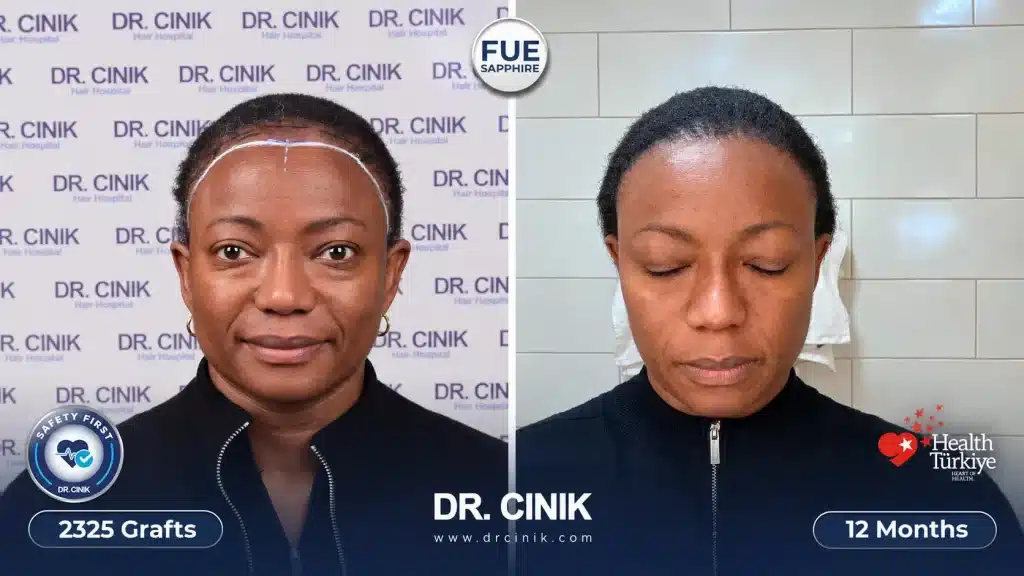
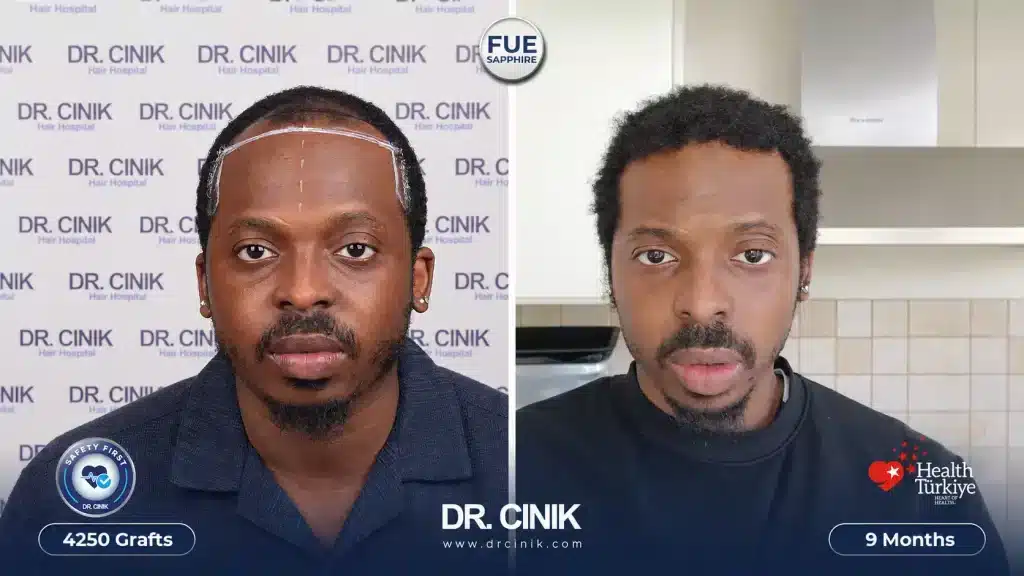
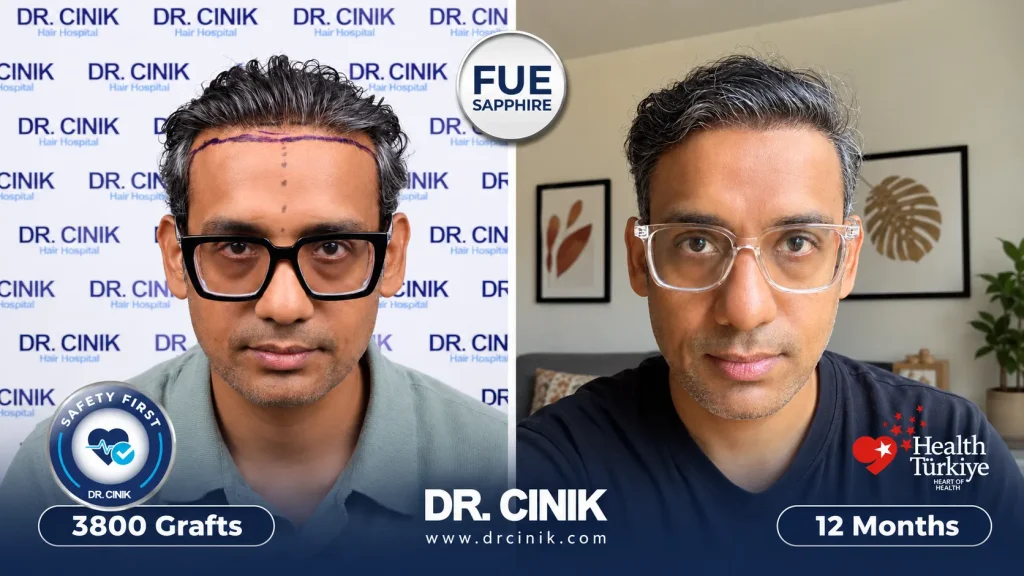
Let’s be frank: no product in the world can revive a dead hair follicle. When the scalp has been smooth for a long time, creams and pills are no longer effective. Only a hair transplant in Turkey can restore density to these areas.
Current techniques such as Sapphire FUE and DHI provide natural-looking results, without the linear scarring of older methods. Medical treatments remain valuable for preserving what hair remains and prolonging the transplant results.

Understand why your hair is falling out
Searching for “the best product” without knowing why your hair is falling out is rather like shooting in the dark. The Norwood-Hamilton scale helps to pinpoint male pattern baldness. But the cause can be something else entirely: intense stress, iron deficiency, thyroid problems, medication…
Each diagnosis calls for a different treatment.

When products reach their limits
There comes a point when lotions and pills are simply no longer enough. PRP (Platelet-Rich Plasma) concentrates your own growth factors and reinjects them where it counts. Studies show 30 to 40% restoration of density in weakened areas after just a few sessions.
The Regenera Activa mesograft takes the concept further by using your own stem cells. A single session to revitalise weakened follicles.
Dr. Emrah Cinik has been practising hair restoration for over twenty years. His approach? Combining medical treatments and surgery according to each patient’s specific needs, no one-size-fits-all protocol. PRP is systematically included in transplant packages to maximise graft survival.
A free consultation allows you to gain a clearer understanding of your situation and develop a coherent plan, whether with products alone or a more comprehensive approach.

Scientific references
Kaufman, K. D., Olsen, E. A., Whiting, D., Savin, R., DeVillez, R., Bergfeld, W., … & Gormley, G. J. (1998). Finasteride in the treatment of men with androgenetic alopecia. Journal of the American Academy of Dermatology, 39(4), 578-589. https://pubmed.ncbi.nlm.nih.gov/9777765/Olsen, E. A., Dunlap, F. E., Funicella, T., Koperski, J. A., Swinehart, J. M., Tschen, E. H., & Trancik, R. J. (2002). A randomized clinical trial of 5% topical minoxidil versus 2% topical minoxidil and placebo in the treatment of androgenetic alopecia in men. Journal of the American Academy of Dermatology, 47(3), 377-385. https://pubmed.ncbi.nlm.nih.gov/12196747/Rossi, A., Mari, E., Scarnò, M., Garelli, V., Maxia, C., Scali, E., … & Carlesimo, M. (2012). Comparative effectiveness of finasteride vs Serenoa repens in male androgenetic alopecia: a two-year study. International Journal of Immunopathology and Pharmacology, 25(4), 1167-1173. https://pubmed.ncbi.nlm.nih.gov/23298508/Cho, Y. H., Lee, S. Y., Jeong, D. W., Choi, E. J., Kim, Y. J., Lee, J. G., … & Cha, H. S. (2014). Effect of pumpkin seed oil on hair growth in men with androgenetic alopecia: a randomized, double-blind, placebo-controlled trial. Evidence-Based Complementary and Alternative Medicine, 2014, 549721. https://pubmed.ncbi.nlm.nih.gov/24864154/Almohanna, H. M., Ahmed, A. A., Tsatalis, J. P., & Tosti, A. (2019). The role of vitamins and minerals in hair loss: a review. Dermatology and Therapy, 9(1), 51-70. https://pmc.ncbi.nlm.nih.gov/articles/PMC6380979/