en
en 

Rosemary essential oil for hair growth: what science really tells us


Summary
Nearly half of all men experience hair loss after 50, and women aren’t spared either. When you’re watching your hair thin, it can knock your confidence in ways that are hard to explain to someone who hasn’t been through it. Small wonder, then, that so many people turn to natural remedies.

Rosemary essential oil (Rosmarinus officinalis) has been used traditionally for centuries, but here’s what’s changed: in recent years, proper clinical research has actually put it to the test. And I mean proper studies, the kind that compare it directly to minoxidil 2%, which is approved by medicines regulators for treating hair loss.
Now, before we go any further, a word of caution. The internet is awash with miracle claims about rosemary oil. Some of them border on the fantastical. What makes this particular remedy worth discussing is precisely because it’s been subjected to rigorous scientific scrutiny. The results are interesting, genuinely so, and they’re worth examining properly.
Androgenetic alopecia (that’s the medical term for pattern baldness) isn’t just about getting older. It’s a specific biological process driven by genetic sensitivity to androgen hormones, particularly DHT. This hormone gradually shrinks hair follicles, what we call miniaturisation, until they can’t produce proper hair anymore. Understanding how rosemary works on these mechanisms gives us a clearer picture of what it can and can’t do.

How rosemary actually works on your hair
Rosemary oil doesn’t just vaguely “nourish” the scalp, as you might read on wellness blogs. The mechanisms are more specific than that, and researchers have identified exactly what’s happening at a cellular level.
Blocking DHT: the main mechanism
The primary action centres on an enzyme called 5-alpha-reductase. This enzyme converts testosterone into DHT, the hormone responsible for shrinking hair follicles in people genetically predisposed to pattern baldness. Laboratory studies show that rosemary extract inhibits this enzyme by 82.4% at 200 µg/mL concentration, increasing to 94.6% at 500 µg/mL.

To put that in context, finasteride (the standard pharmaceutical treatment you might know as Propecia) achieves 81.9% inhibition at 250 nM. We’re talking about comparable levels of enzyme suppression.
Researchers have pinpointed the active compound doing the heavy lifting: 12-methoxycarnosic acid. This molecule blocks the conversion of testosterone to DHT effectively. Think of DHT as gradually restricting the space your hair follicles have to work with, like a plant in an increasingly smaller pot. By limiting DHT production, rosemary helps preserve that vital space.

Better blood flow to the scalp
Rosemary oil improves microcirculation in the scalp, it gets more blood flowing to your follicles, delivering oxygen and nutrients where they’re needed. This is one of the ways minoxidil works, and rosemary appears to trigger a similar response.
Some people notice a slight warming sensation or mild tingling when they apply it. That’s the increased circulation at work.

Influencing the hair growth cycle
Your hair cycles through three phases: anagen (active growth), catagen (transition), and telogen (resting). In healthy scalps, the ratio of growing to resting hair sits at about 12 to 1 With androgenetic alopecia, that ratio drops to roughly 5 to 1, meaning far more hair is sitting dormant.
Rosemary prolongs the anagen phase, keeping hair in active growth for longer.

What the clinical studies actually show
Rosemary versus minoxidil: the head-to-head study
A clinical trial with 100 patients suffering from androgenetic alopecia compared rosemary oil directly to minoxidil 2%. They split participants into two groups of 50: one applied rosemary oil (3.7 mg/mL) daily, the other used minoxidil 2%. The study ran for six months with check-ins along the way.
After three months? No significant change in either group. Now, that might not sound very reassuring, but it’s actually what makes this study credible; they didn’t massage the data to show early wins. Hair growth takes time because the biological cycle can’t be rushed.

However, at the six-month mark, both groups showed significant increases in hair count. Here’s the compelling bit: statistically, there was no difference between the rosemary group and the minoxidil group. The essential oil performed as well as the conventional treatment.
One detail worth noting: scalp itching was significantly more common in the minoxidil users. In terms of skin tolerance, rosemary came out better.

The aromatherapy combination study
Another study used a blend of thyme, rosemary, lavender, and cedar in carrier oils. Results published in Archives of Dermatology showed that 44% of patients in the treatment group experienced improvement, compared to just 15% in the control group. When you combine several essential oils, there seems to be a synergistic effect, they work better together than alone.
Recent research with modern formulations
The most recent studies (2024-2025) provide even more precise data using contemporary rosemary-based formulations. A double-blind trial measured growth rate improvements of 57.73% for a rosemary-lavender combination and 47.59% for rosemary-castor oil.
Hair thickness increased by nearly 70%, whilst density improved by approximately 32%. These weren’t subjective assessments, they used phototrichography, which provides measurable, reproducible data. Hair loss reduction exceeded 40% in both treatment groups.

Why the six-month wait? It comes down to the hair cycle itself. Follicles in the resting phase need to complete their cycle before entering the growth phase. No treatment, natural or pharmaceutical, can artificially accelerate this biological timeline. Patience is built into the process.
Beyond DHT: other benefits for your scalp
Rosemary’s anti-androgenic action is the headline act, but several supporting mechanisms create an environment where hair can thrive.
The active compounds at work
Rosemary oil contains multiple bioactive molecules working together. Rosmarinic acid functions as both a powerful antioxidant and anti-inflammatory, protecting follicles from oxidative stress. Carnosic acid reinforces this protection, creating a shield against the daily oxidative damage we all experience from pollution, UV exposure, and general cellular metabolism.
Caffeic acid stimulates circulation and energises the scalp. Camphor provides a local stimulating effect and that cooling sensation some users notice. And as mentioned, 12-methoxycarnosic acid remains the star player for DHT inhibition.

Protecting and balancing the scalp
Your scalp faces the same daily assaults as the rest of your skin: pollution, UV rays, free radicals. The antioxidants in rosemary act as a protective buffer. This matters because oxidative stress contributes to premature ageing of hair follicles.
Chronic inflammation makes hair loss worse, it’s a vicious cycle. By dampening inflammation, rosemary helps break that pattern. Its antimicrobial properties also help maintain a healthy scalp microbiome. Yes, just like your gut, your scalp hosts a population of microorganisms whose balance affects hair health.

Multiple mechanisms, one treatment
What sets rosemary apart from single-mechanism hair loss treatments is this multi-pronged approach. It works simultaneously on hormonal pathways (DHT inhibition), circulation (blood flow), cellular protection (antioxidants), inflammation (scalp soothing), and microbial balance. This synergy likely explains why it performs so well in clinical studies despite being a natural extract.
Using it properly: the practical guide
Effectiveness depends entirely on correct usage. Here’s what you need to know.
Never use it neat
This bears repeating: never apply pure essential oil to your scalp. Essential oils are extremely concentrated. Applied undiluted, they can cause severe irritation or even chemical burns. Always dilute to a concentration of 2-5% maximum in a carrier oil.
In practical terms: for every 100 mL of carrier oil, add 2-5 mL of rosemary essential oil (roughly 60-150 drops, depending on your dropper). Good carrier oils include jojoba (lightweight, absorbs easily), castor oil (thicker, more nourishing), grapeseed (pleasant texture), or coconut oil (moisturising).

How to apply it
Clinical studies used daily or twice-daily application. Consistency trumps quantity here, a small amount every day beats a large dose once a week.
Prepare your dilution in a bottle with a dropper or applicator tip. Apply directly to the scalp (you don’t need to saturate the hair lengths). Massage gently for 2-3 minutes, this improves both circulation and product absorption. Leave it on for at least two hours, ideally overnight to maximise contact time. Shampoo as normal the next day.
Timeline: managing expectations
Studies show results after six months of consistent use. If you abandon ship after a few weeks because you’re not seeing dramatic changes, you’ll never know whether it would have worked.
During month one, you probably won’t notice anything. Between months two and three, you might observe that hair loss is slowing. From month four onwards, early signs of regrowth become visible. Optimal results typically appear at six months and may continue improving beyond that point.

Essential safety precautions
Before your first full application, do a patch test: apply a small amount of your diluted mixture to your inner forearm and wait 24 hours. If you see redness or feel itching, don’t use that formulation on your scalp.
Pregnant or breastfeeding women should avoid essential oils generally. Keep the mixture away from your eyes, if it gets in, rinse thoroughly with clean water. If you experience persistent irritation despite proper dilution, stop using it and see a dermatologist.
Here’s something many people overlook: if you’re experiencing sudden or dramatic hair loss, see a doctor first. This could signal an underlying health issue, iron deficiency, thyroid problems, significant stress, that requires proper medical diagnosis, not a topical treatment.

Rosemary oil or hair transplant: which makes sense for you?
Time for some straight talk. Rosemary oil won’t regrow hair on areas that have been completely bald for years. It can slow progression, stimulate follicles that are still active, and improve overall scalp health. That’s genuinely valuable, but it’s not magic.
When rosemary is the right choice
Rosemary works well if you’re in the early stages of hair loss, want to prevent further progression, or you’re looking to complement other treatments. It’s natural, well-tolerated, and scientifically validated for these scenarios.
People noticing gradual thinning, decreased density, or finer hair texture are good candidates.

Where natural solutions reach their limits
With advanced alopecia, significant bald patches, a receding hairline, visible temple thinning, natural remedies can only do so much. Once follicles have completely disappeared, no topical treatment can resurrect them. That’s not pessimism; it’s physiology. Dead follicles can’t be reawakened by oil or medication.
When transplantation becomes the answer
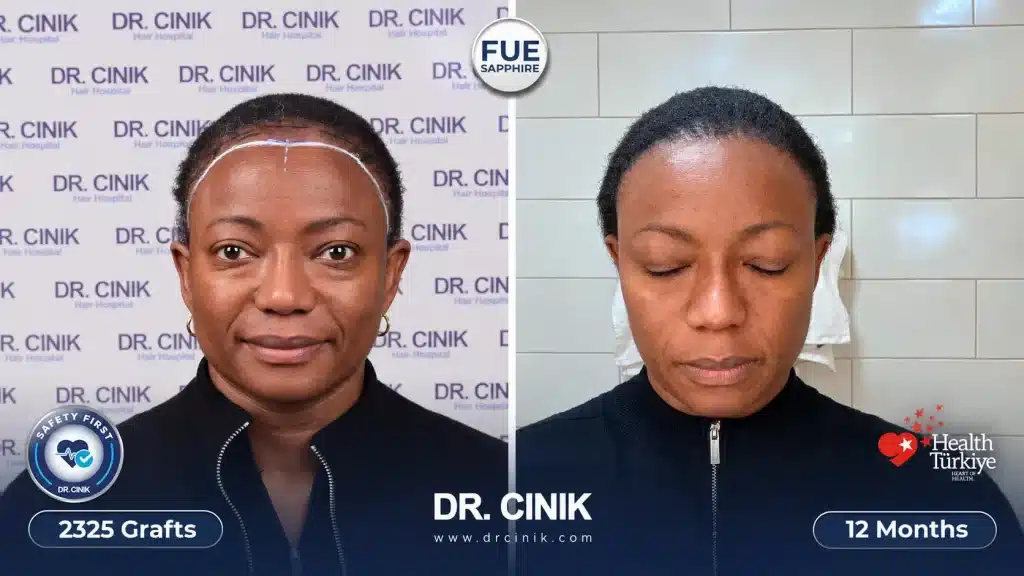
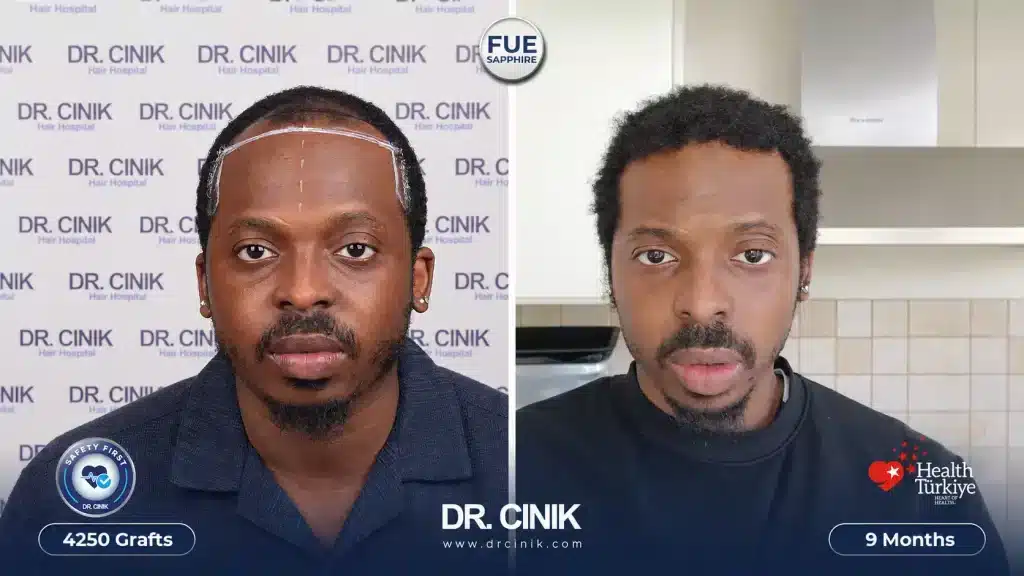
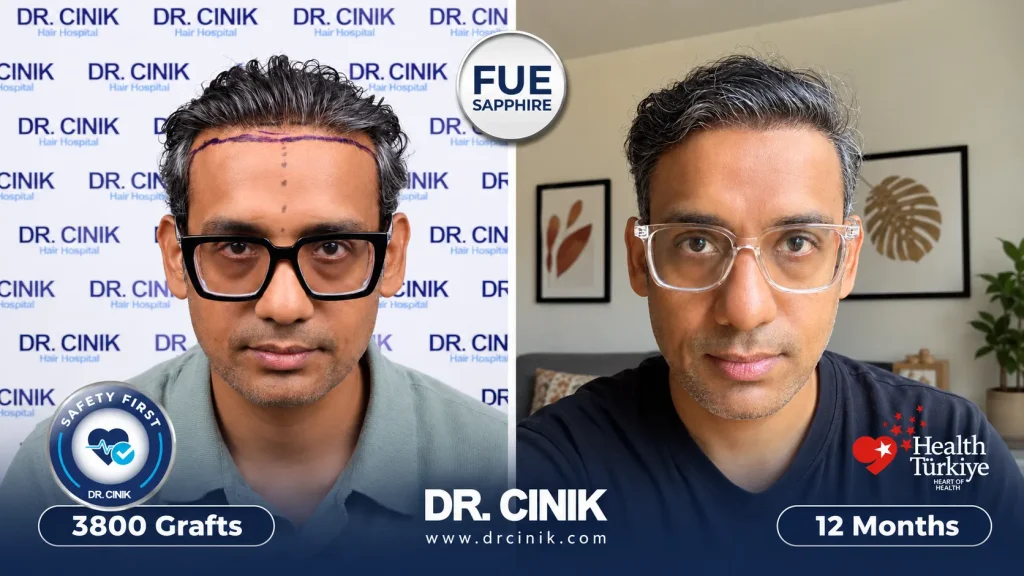
This is where hair transplantation offers something fundamentally different. Instead of trying to preserve existing hair, it permanently restores lost areas by relocating healthy follicles from the donor zone (typically the back and sides of your head, which are genetically resistant to DHT).

At Dr Cinik’s clinic, we offer several techniques tailored to different situations:
Sapphire FUE uses sapphire crystal blades to create exceptionally precise micro-incisions. The result is denser, more natural-looking placement with faster healing. This technique suits most cases and delivers excellent long-term outcomes.
DHI (Direct Hair Implantation) lets us place grafts directly using a Choi implanter pen, without creating incisions first. It’s particularly good for adding density to partially thinned areas or for patients who want to keep their hair long during treatment.
Classic FUE remains a proven option that works brilliantly for most patients with moderate to advanced hair loss.

All our packages include PRP (Platelet-Rich Plasma) therapy, which supports healing and stimulates graft growth. We also offer Regenera Activa mesotherapy to optimise scalp health before and after your procedure.

Our approach centres on honest assessment and realistic planning. With over 20 years of experience and techniques meeting international standards (ISHRS-compliant), we evaluate each patient individually during a free consultation. We’ll analyse your hair profile, alopecia stage, donor area quality, expectations, and recommend a tailored plan. No pressure, no obligation. Just honest medical advice.

Sometimes the best strategy combines both approaches: a transplant to restore significantly thinned areas, with treatments like rosemary to maintain areas that still have reasonable density. This comprehensive approach maximises long-term results.
Whether you choose a natural approach, surgical restoration, or a combination, what matters is making an informed decision based on your specific situation. Rosemary oil has proven effective within a particular context. Hair transplantation in Turkey offers permanent solutions for advanced cases. The right choice depends on where you are in your hair loss journey, ideally assessed with professional guidance.
Scientific sources:
Panahi, Y., Taghizadeh, M., Marzony, E. T., & Sahebkar, A. (2015). Rosemary oil vs minoxidil 2% for the treatment of androgenetic alopecia: a randomized comparative trial. Skinmed, 13(1), 15-21. https://pubmed.ncbi.nlm.nih.gov/25842469/
Murata, K., Noguchi, K., Kondo, M., Onishi, M., Watanabe, N., Okamura, K., & Matsuda, H. (2013). Promotion of hair growth by Rosmarinus officinalis leaf extract. Phytotherapy Research, 27(2), 212-217. https://pubmed.ncbi.nlm.nih.gov/22517595/
Hay, I. C., Jamieson, M., & Ormerod, A. D. (1998). Randomized trial of aromatherapy. Successful treatment for alopecia areata. Archives of Dermatology, 134(11), 1349-1352. https://pubmed.ncbi.nlm.nih.gov/9828867/
National Center for Complementary and Integrative Health. (2020). The Use of Natural Ingredients in the Treatment of Alopecias with an Emphasis on Central Centrifugal Cicatricial Alopecia: A Systematic Review. PMC. https://pmc.ncbi.nlm.nih.gov/articles/PMC7595365/
Al-Obaidi, J. R., et al. (2024). An Overview of Commonly Used Natural Alternatives for the Treatment of Androgenetic Alopecia, with Special Emphasis on Rosemary Oil. Cureus, 16(11). https://pmc.ncbi.nlm.nih.gov/articles/PMC11549889/
Tuli, N., et al. (2025). A Clinical Evaluation of the Safety, Efficacy, and Tolerability of the Soulflower Rosemary Redensyl Hair Growth Serum, Tetragain™, in Healthy Female Subjects for the Treatment of Alopecia. Cureus. https://pubmed.ncbi.nlm.nih.gov/39917132/
Patel, S., et al. (2025). Rosmagain™ as a Natural Therapeutic for Hair Regrowth and Scalp Health: A Double-Blind, Randomized, Three-Armed, Placebo-Controlled Clinical Trial. Cureus. https://pubmed.ncbi.nlm.nih.gov/40656290/
Sharma, M., et al. (2023). Evaluation of Herbal Hair Lotion loaded with Rosemary for Possible Hair Growth in C57BL/6 Mice. Journal of Pharmaceutical Negative Results, 14(3). https://pmc.ncbi.nlm.nih.gov/articles/PMC10186041/
Abla, K. K., et al. (2025). Alopecia Management Potential of Rosemary-Based Nanoemulgel Loaded with Metformin: Approach Combining Active Essential Oil and Repurposed Drug. International Journal of Nanomedicine, 20, 605-624. https://pmc.ncbi.nlm.nih.gov/articles/PMC11745075/
Lee, B. H., et al. (2019). Complementary and alternative supplements: a review of dermatologic effectiveness for androgenetic alopecia. Journal of Drugs in Dermatology. https://pmc.ncbi.nlm.nih.gov/articles/PMC6388561/
Hashem, M. M., et al. (2024). Rosemary and neem: an insight into their combined anti-dandruff and anti-hair loss efficacy. Scientific Reports, 14(1), 7780. https://pubmed.ncbi.nlm.nih.gov/38565924/