en
en 

Starting Baldness at 16: What to Do?


Summary
Losing your hair at 16? We understand it’s incredibly tough. When your mates are worrying about spots or what to wear, you’re checking your hairline in every mirror. Early baldness might feel like the end of the world, but here’s the thing: you’re not alone, and there’s plenty we can do about it.
Baldness: What is it?
Baldness is when you permanently lose hair in specific areas usually starting at the temples, crown, or along your hairline. It’s different from temporary hair loss that might happen after stress or illness. The hair gradually gets thinner and wispier until it stops growing completely.
Here’s a fact that might surprise you: nearly two-thirds of men will experience some degree of hair loss in their lifetime. The most common type? Androgenetic alopecia basically, your genetics and hormones teaming up against your hair follicles. Not exactly fair, is it?

Is it possible to have baldness at 16?
Absolutely and you’re not imagining things. A recent study looking at 145 young patients found the average age for detecting baldness was just over 16 years old (Losoya-Jaquez et al., 2023). Some teenagers notice their hair changing almost overnight. Others see a gradual thinning that their parents might dismiss as “just a phase.”
But here’s what we tell our young patients: if you’re noticing changes, trust your instincts. At 16, hair loss isn’t about getting older it’s usually down to hormones kicking in early, genetics making themselves known, or sometimes overwhelming stress. Whatever the cause, catching it early gives us the best chance to do something about it.

What are the causes of premature baldness?
Let’s get straight to it the main culprit is usually androgenetic alopecia. Sounds complicated, but it’s actually quite simple: some people’s hair follicles are extra sensitive to a hormone called DHT (that’s dihydrotestosterone, derived from testosterone). Think of DHT as putting your hair growth cycle on fast-forward the hair grows for less time, gets thinner with each cycle, and eventually gives up altogether.
In some young men, this process kicks off right at the end of puberty. Frustrating? Absolutely. Treatable? Definitely.

Stress and psychological disorders
We can’t ignore the elephant in the room being a teenager is stressful enough without adding hair loss to the mix. Exams, relationships, university applications… it all adds up. Chronic stress can trigger something called telogen effluvium, where loads of hair follicles basically decide to take a break at the same time.
The good news? Stress-related hair loss is usually temporary. The not-so-good news? It can unmask underlying genetic hair loss that was waiting in the wings.

Nutritional Deficiencies
Let’s be honest teenage diets aren’t always brilliant. Too many takeaways, skipped breakfasts, energy drinks instead of proper meals… sound familiar? Your hair needs proper nutrition to grow, and when you’re running on empty, it shows.
Lack of iron, zinc, vitamin D, or biotin can seriously weaken your hair. We’ve seen patients whose hair loss improved dramatically just by sorting out their diet and adding the right supplements.

Hormonal and Medical Disorders
Sometimes there’s more going on under the surface. Thyroid problems can wreak havoc on your hair both overactive and underactive thyroids cause hair loss. Certain medications have side effects too, though at 16, this is less likely to be the issue.
Worth knowing: Alopecia areata is another possibility an autoimmune condition that causes patchy hair loss. It’s different from male pattern baldness and needs different treatment, which is why getting a proper diagnosis matters.
How to prevent the onset of baldness?
Right, so you’ve spotted the signs what now? The key is acting quickly. We’re not talking about panicking and trying every miracle cure on the internet (please don’t). We mean taking sensible, proven steps to protect the hair you’ve got and encourage new growth.
First things first: book an appointment with a dermatologist or hair specialist. I know, I know another doctor’s appointment. But this is important. They’ll probably suggest a blood test to check for deficiencies or thyroid issues. They might also do a trichoscopy (basically a really close look at your scalp) or a phototrichogram to track what’s happening over time.
Getting a proper diagnosis isn’t just medical box-ticking it’s about creating a treatment plan that actually works for you.

Drug Treatments
Let’s talk about the medical options. There are two main players here:
Minoxidil is a liquid or foam you apply to your scalp. It improves blood flow to the follicles and can extend the growth phase of your hair. The best bit? You can start using it as soon as you notice thinning. It’s available over the counter, though we’d still recommend chatting to a doctor first.
Finasteride is a tablet that blocks DHT production. It’s pretty effective, but and this is important it’s only for adults and needs careful monitoring. Recent research has raised some concerns about long-term side effects beyond the well-known sexual ones (Traish, 2020). We’re always completely upfront about these risks with our patients.

Medical-aesthetic Treatments
Before you even think about a hair transplant, there are some brilliant non-surgical options that can make a real difference.
PRP (Platelet Rich Plasma) treatment is genuinely exciting stuff. We take a small amount of your blood, spin it to concentrate the platelets, then inject this platelet-rich plasma back into your scalp. Sounds a bit sci-fi, doesn’t it? But it works the growth factors in your platelets can wake up sleeping follicles and strengthen existing hair. Studies show it can really boost hair growth through improved cell activity and blood vessel formation (Paichitrojjana & Paichitrojjana, 2022). And because it’s your own blood, there’s no risk of allergic reactions. Perfect for catching baldness early.
Then there’s Regenera Activa another treatment we’re rather excited about. This uses your own stem cells from the back of your head (where hair never falls out handy, that). We process these cells and inject them into thinning areas. Clinical studies have shown around 33% improvement in hair density after 23 weeks (Gentile, 2019). Not bad for a single treatment session.

Is hair transplantation a solution for early baldness?
The short answer? Yes, but let’s pump the brakes a bit.
Hair transplantation can absolutely work for young patients, but it needs careful planning. Here’s why: the donor area at the back of your head isn’t an unlimited resource. Use too much too early, and you might not have enough for later if your hair loss continues.
This is where experience really matters. Any surgeon worth their salt will think long-term. They’ll assess not just where you are now, but where your hair loss might go. They’ll create a natural-looking hairline that will still look good in 20 years, not just next month.

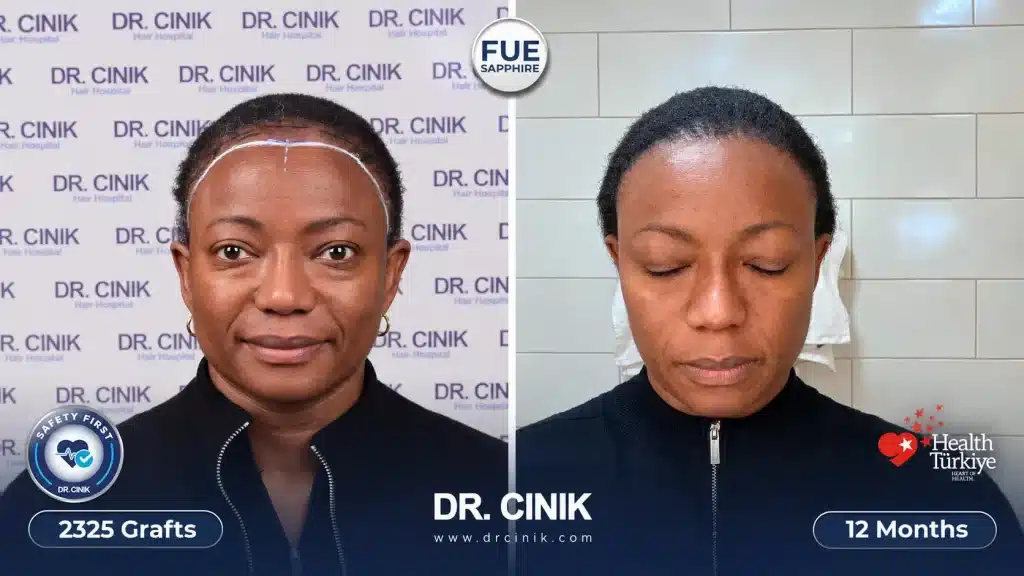
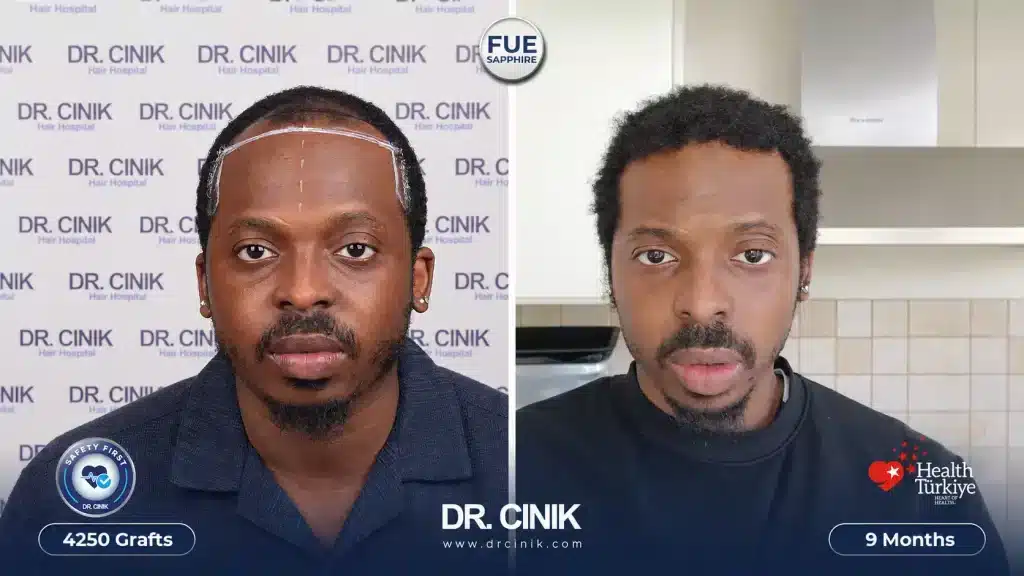
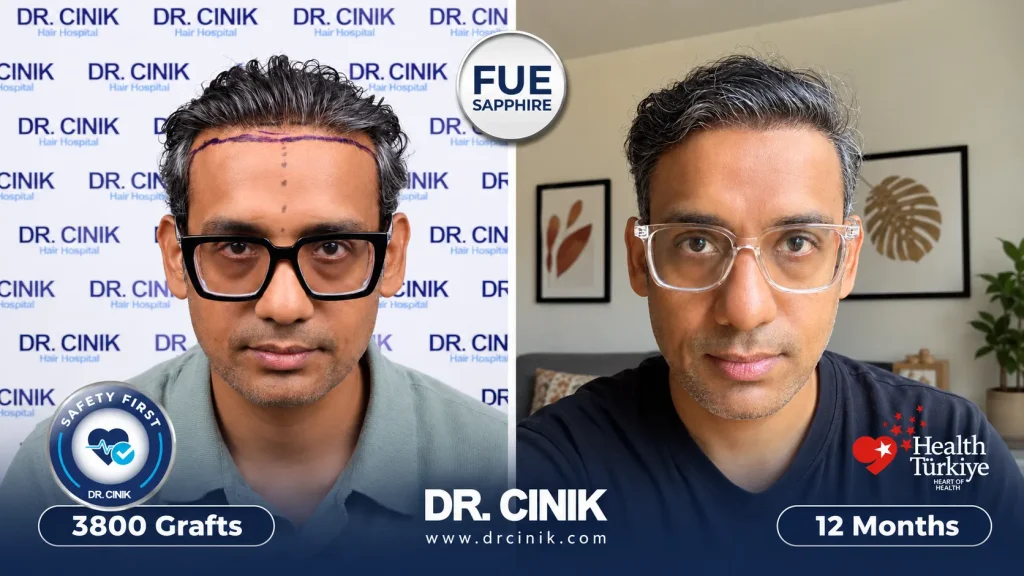
Dr Emrah Cinik understands this perfectly. With over twenty years of experience and thousands of successful procedures, he’s seen it all. When young patients come to see him, he doesn’t just look at what they want today he plans for their future. Using advanced techniques like FUE or DHI (no visible scarring with these methods), he creates results that look completely natural and age well.
But here’s the crucial bit: a good surgeon will sometimes say “not yet.” If you’re 16 with early thinning, they might recommend trying other treatments first, stabilising the hair loss, then considering a transplant later if needed. That’s not them fobbing you off that’s them looking after your long-term interests.
Discovering you’re losing your hair at 16 can feel devastating we get it. But catching it early is actually an advantage. You’ve got time on your side and more treatment options than ever before. Whether it’s medications, regenerative treatments, or eventually a hair transplant in Turkey, there’s a path forward that’s right for you.
The key is getting proper advice from experts who understand both the medical side and the emotional impact. Don’t suffer in silence, and definitely don’t rely on Dr Google. Book that consultation, get a proper diagnosis, and let’s create a plan that gives you back your confidence. Your hair and your future self will thank you for it.
Academic References
Gentile, P. (2019). Autologous Cellular Method Using Micrografts of Human Adipose Tissue Derived Follicle Stem Cells in Androgenic Alopecia. International Journal of Molecular Sciences, 20(14), 3446. https://pmc.ncbi.nlm.nih.gov/articles/PMC6678214/
Losoya-Jaquez, M.R., Lopez Yañez-Blanco, A., Armendariz-Barragan, Y., Aguilar-Figueroa, N.G., Rudnicka, L., & Sanchez-Dueñas, L.E. (2023). Androgenetic Alopecia in Children and Adolescents: From Trichoscopy to Therapy. Skin Appendage Disorders, 10(2), 123–128. https://pmc.ncbi.nlm.nih.gov/articles/PMC10987064/
Paichitrojjana, A., & Paichitrojjana, A. (2022). Platelet Rich Plasma and Its Use in Hair Regrowth: A Review. Drug Design, Development and Therapy, 16, 635–645. https://pmc.ncbi.nlm.nih.gov/articles/PMC8922312/
Traish, A.M. (2020). Health Risks Associated with Long-Term Finasteride and Dutasteride Use: It’s Time to Sound the Alarm. The World Journal of Men’s Health, 38(3), 323–337. https://pmc.ncbi.nlm.nih.gov/articles/PMC7308241/