en
en 

PP405 and clascoterone: the new anti-hair loss drugs in 2026–2027


Summary
For over thirty years, medicine has offered two molecules for hair loss: minoxidil and finasteride. Both work. But plenty of patients find the results plateau, or the side effects aren’t worth it.
That’s finally changing. The pharmaceutical pipeline is moving faster than it has in decades, and three molecules are getting serious attention at dermatology conferences: clascoterone, PP405, and ET-02. Each takes a different approach. Here’s what the clinical data actually says.
Why hair research is set to take off in 2026
Androgenetic alopecia affects somewhere between 1.2 and 2 billion men worldwide. It’s also the leading cause of hair loss in women after the menopause. The global treatment market was valued at over $23 billion in 2021 and is still growing.
And yet, in terms of actual new drugs, the cupboard is bare. The FDA hasn’t approved a new molecule for male pattern baldness since 1997. Nearly thirty years of nothing.

The problem with existing treatments is well understood. Minoxidil improves scalp blood flow through vasodilation. It works, but it doesn’t touch the hormonal cause of follicle miniaturisation. Finasteride blocks the conversion of testosterone to DHT, the hormone that shrinks follicles and thins hair. The catch is that it acts systemically, throughout the whole body, and the sexual side effects put a lot of men off. The FDA recently required that suicidal ideation be added to its list of warnings.
All three new molecules aim to fill that gap.
Clascoterone: blocking DHT without affecting hormones
First topical anti-androgen in its class
Clascoterone (Breezula®, CB-03-01) is developed by Cassiopea/Cosmo Pharmaceuticals. The idea is straightforward: it binds directly to the androgen receptors on the hair follicle, stopping DHT from attaching. Unlike finasteride, it works locally. You get the anti-androgenic benefit without disrupting circulating hormones.
A 1% cream version (Winlevi®) was FDA-approved in 2020 for acne. For baldness, a 5% solution is under development. The higher concentration is needed to reach follicles deep within the scalp.

Phase 3 results worth noting
The latest data comes from SCALP 1 and SCALP 2, two multicentre, randomised, double-blind, phase 3 trials. 1,465 men were recruited across 51 centres in the United States and Europe. Participants applied clascoterone 5% or placebo twice daily for six months.
The figures published at the end of 2025 are clear.
SCALP 1: 539% relative improvement in hair count in the target area compared to placebo. SCALP 2: 168% relative improvement.
There’s a notable gap between the two studies, but both reached the statistical significance threshold for regulatory approval.
On safety, the profile was comparable to placebo. Adverse effects were mostly mild irritation at the application site. No significant systemic effects were recorded. Professor Maria Hordinsky, the trial’s principal investigator and professor of dermatology at the University of Minnesota, said patients tolerated the treatment well and that internal side effects were virtually nonexistent. That matters, because it’s a genuine advantage over oral 5-alpha reductase inhibitors.
Timeline
Cosmo Pharmaceuticals will complete the 12-month safety follow-up in spring 2026. Regulatory submissions will follow in the US and Europe. If everything goes to plan, clascoterone could be on the market by 2027, which would make it the first new mechanism of action against baldness in over thirty years.
PP405: waking up dormant stem cells
A mechanism that has nothing to do with hormones
PP405 takes a completely different route. Developed by Pelage Pharmaceuticals, a UCLA spin-off founded in 2018, this topical gel targets the metabolism of hair follicle stem cells. It has nothing to do with hormones or blood flow. It’s about cellular energy.

It stems from a discovery published in 2017 in Nature Cell Biology by William Lowry and Heather Christofk. Their work showed that follicle stem cells use a specific glycolytic metabolism, producing far more lactate than other epidermal cells. This lactate production turns out to be essential for activating them. When the lactate dehydrogenase (LDHA) enzyme was suppressed in mice, follicles stayed dormant. When lactate production was forced by blocking the mitochondrial pyruvate transporter (MPC1), the stem cells reactivated and the hair cycle restarted.
PP405 works on exactly this principle. It prevents pyruvate from entering the mitochondria, forcing the cell to convert it into lactate instead. The excess lactate wakes up dormant stem cells in the follicle, even in areas already affected by hair loss where follicles are dormant but haven’t been destroyed.

Because the mechanism isn’t hormonal, it theoretically works in both men and women. Finasteride, by contrast, isn’t approved for women.
Rapid and unusual results
The phase 2a trial recruited 78 men and women with androgenetic alopecia. Participants applied a topical gel of 0.05% PP405 or placebo once daily for four weeks, with follow-up running to 12 weeks.
The results, announced in June 2025, surprised people. Among men with advanced baldness, 31% gained more than 20% hair density by week 8. In the placebo group: 0%. No systemic absorption was detected in blood samples.
But the most interesting part was what kind of hair grew back. PP405 stimulated the growth of new terminal hairs, thick and visible, in areas where there was previously nothing. That goes beyond slowing hair loss. It’s genuine regrowth.
Conventional treatments, minoxidil in particular, generally need 6 to 12 months before showing visible results. PP405 showed significant biological activity within 8 weeks.
Pelage Pharmaceuticals, backed by $120 million in Series B funding from ARCH Venture Partners and Google Ventures, is launching phase 3 trials in 2026. If the data holds up, FDA approval could come between 2027 and 2029.
ET-02: six times more growth than placebo in five weeks
The candidate that got dermatologists talking
ET-02, developed by Eirion Therapeutics, appeared in January 2025 with phase 1 results that Professor Jerry Shapiro, a world expert in alopecia treatment at New York University, described as “historic”.
The trial enrolled 24 men across three US centres, double-blind. Two concentrations were tested (1.25% and 5%), applied once a day for four weeks. The exact mechanism hasn’t been fully disclosed, but it’s thought to act via follicular stem cell biology without any hormonal interference.

The numbers
At the end of week 5, the 5% solution produced six times more hair growth than placebo. Hair thickness increased by roughly 10% compared to controls. There were no significant adverse effects. No irritation, no burning, no abnormal blood results.
To give that some scale: one month of ET-02 at 5% appears to have produced more hair growth than four months of topical minoxidil in separate trials. That comparison isn’t direct, since there’s been no head-to-head study, but the order of magnitude is what impressed dermatologists.
Eirion is planning a phase 2 trial with 150 patients over six months. The once-daily application would also be a practical advantage over minoxidil, which typically needs applying twice a day.

Will these new molecules replace hair transplants?
No. Not now, and probably not for a while yet.
These are real advances. But they’re continuous treatments. You’d need to apply them regularly, probably for life, to keep the results. That’s the same as minoxidil or finasteride today. Stop, and hair loss picks up again.
And for advanced baldness, even PP405 has its limits. Pelage Pharmaceuticals has said plainly: if the follicle is irreversibly scarred, the treatment won’t work.

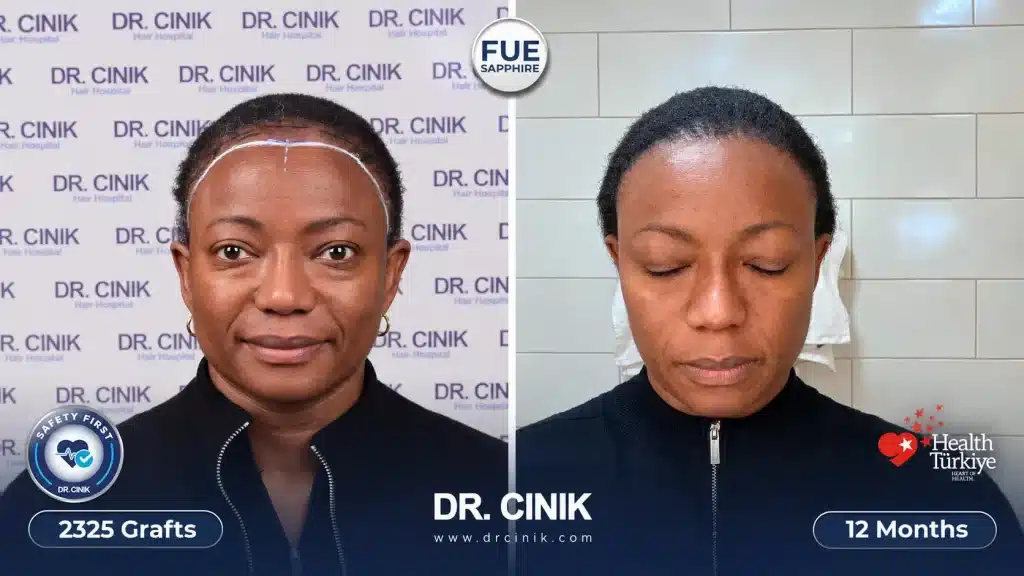
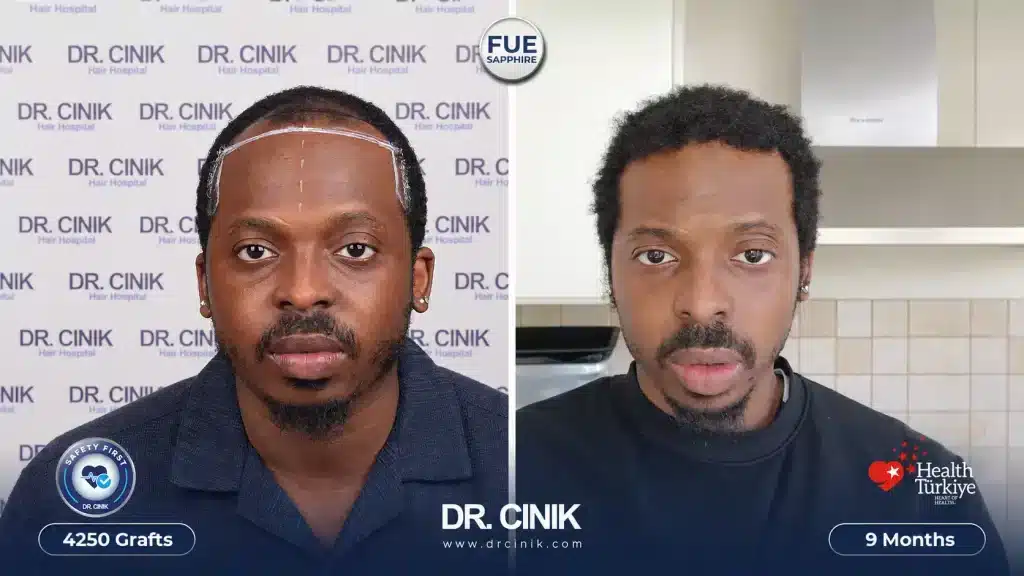
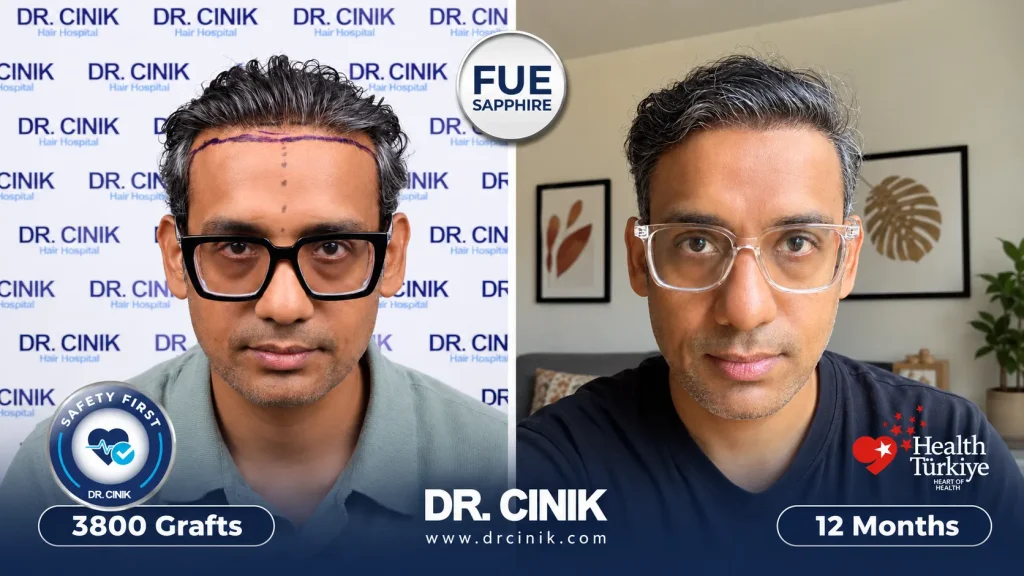
That’s where hair transplantation still comes in. Modern techniques like Sapphire FUE or DHI move follicles that are genetically resistant to DHT from the donor area. The result is permanent. Those transplanted hairs don’t fall out.
In our experience at Dr Cinik’s clinic, the best approach is often a combined one: a hair transplant in Turkey to restore density where follicles have gone, and medical treatment (current or future) to protect what’s left of the natural hair. Some patients also add mesotherapy sessions or Regenera Activa mesografting to encourage regrowth around the transplanted area.

What can you do until 2027?
You don’t need to wait for these molecules to reach the market. Effective options exist now. Dr Emrah Cinik has over 20 years of experience and works to ISHRS standards. He offers a free personalised assessment. Whether it’s medical treatment, a transplant, or both, every case is different.
Prices for different techniques and before-and-after results are all available online. To find out whether you’re a candidate for a hair transplant, a single consultation is all you need.
Scientific references
Flores, A., Schell, J., Krall, A. S., Jelinek, D., Miranda, M., Grigorian, M., … & Lowry, W. E. (2017). Lactate dehydrogenase activity drives hair follicle stem cell activation. Nature Cell Biology, 19(9), 1017-1026. https://pmc.ncbi.nlm.nih.gov/articles/PMC5657543/
Marks, D. H., Prasad, S., De Souza, B., Burns, L. J., & Senna, M. M. (2020). Topical antiandrogen therapies for androgenetic alopecia and acne vulgaris. American Journal of Clinical Dermatology, 21(2), 245-254. https://pubmed.ncbi.nlm.nih.gov/31802398/
Mazzetti, A., Cartwright, M., Moro, L., et al. (2019). A summary of in vitro, phase I, and phase II studies evaluating the mechanism of action, safety, and efficacy of clascoterone (cortexolone 17α propionate, CB-03-01) in androgenetic alopecia. Journal of the American Academy of Dermatology, 81(4), AB13.
Siah, T. W., & Sinclair, R. (2023). Androgenetic alopecia: Therapy update. Drugs, 83(8), 701-715. https://pmc.ncbi.nlm.nih.gov/articles/PMC10173235/
Tosti, A., & Siah, T. W. (2020). Clascoterone as a novel treatment for androgenetic alopecia. Dermatology and Therapy, 10, 527-534. https://pubmed.ncbi.nlm.nih.gov/32421862/
ClinicalTrials.gov. (2024). Safety, Pharmacokinetics and Efficacy of PP405 in Adults With Androgenetic Alopecia. NCT06393452. https://clinicaltrials.gov/study/NCT06393452
ClinicalTrials.gov. (2023). A Study to Evaluate the Efficacy and Safety of Clascoterone Solution in Male Subjects With Androgenetic Alopecia (SCALP). NCT05914805. https://clinicaltrials.gov/study/NCT05914805